Wheel of Consent 7‑day Immersion in Atlin, BC at 5 Mile Point
Contact Karen for more information andto register:
604-219-8195
justice.manager@gov.trtfn.com
Join us for this experimental workshop, where we deepen our capacity to tune into our bodies, tend to our sense of safety, and trust ourselves. We gain new insights into what arises for us in various relational dynamics. We expand our ability to skillfullly and gracefully navigate relationships (from intimate to professional).
In-Person Experience
Dates: Wednesday to Tuesday September 16-22, 2026
Hours: 9 AM-4 PM
Location: 5-Mile Point
Tlingit cultural activities will be included throughout the week.
There are several shorter breaks throughout the days, including a 60-minute break for lunch.
Breakfast, Lunch, Tea and snacks are provided.
Group size: Max 16
Individual Coaching Call
We offer one optional 45-minute individual integration call with Helena.
This may support you to deepen and apply the Wheel of Consent practice in both personal and professional contexts.
What is The Wheel of Consent®?
The Wheel of Consent® is a framework and awareness practice developed by Betty Martin around 2000. Since the release of the book The Art of Receiving and Giving: The Wheel of Consent in 2020, the practice has been brought into schools, universities, therapist programs, communities, and organizations around the world.
Consent education often focuses on presenting information, hoping that this will change attitudes and behaviour, with limited success.
The approach of the Wheel of Consent® is focused on providing opportunities to practice very subtle and foundational embodied skills for relating.
These skills include tending to our sense of safety, noticing signals of our body, trusting ourselves, and valuing ourselves and each other.
Engaging in the practice of the Wheel of Consent® develops our skills to notice personal, interpersonal, and group dynamics when making choices, respecting one’s own and other’s boundaries, and navigating relationships with more integrity, clarity, and freedom.
In this practice:
We acknowledge and tend to how power dynamics impact our capacity to choose.
We bring care and compassion for moments and situations that are complex and nuanced.
We offer a space that welcomes mistakes as opportunities to learn and deepen awareness.
Witnessing, being in the presence of, and experiencing non-judgement and care allows more parts of ourselves to come forward.
Especially parts we have been hiding (sometimes even from ourselves) from fear of retribution.
What can I expect from attending the workshop?
Through experimentation and reflection we develop skills in taking care of our own boundaries and supporting others.
We deepen our understanding of how power dynamics, trauma, systemic oppression impact our capacity to access choice and respect for our boundaries.
We develop skills to notice, trust, value, and communicate our own needs.
We learn what it feels like in our bodies when we want something.
We learn what it feels like in our bodies when we are willing to do something or have something happen.
We learn what it feels like in our bodies when we do not want something and when we are not willing to do something or have something happen.
We become more aware of our tendencies to “go along” with what is happening.
We learn to “pause” and tend to safety.
We learn to “pause” and say no.
We learn to communicate more clearly with requests, offers, or invitations.
We learn to notice our response and to communicate it.
Engaging in this practice means engaging with the most fundamental aspects of caring for and respecting personal autonomy. That means we inevitably connect with moments where we haven’t been able to care for our autonomy or respect another’s. It is often tender and impactful.
The practice and learning environment and how the practices are offered are designed to be safe-enough. It is important to acknowledge that what “safe-enough” means varies from individual to individual, and not every environment works for every person.
The practices themselves are designed to be titrated (short in duration and very light in intensity). The pace is slow. We offer many options for how to participate. The group agreements and how the facilitator holds those agreements supports choice and safety.
What happens in the workshop?
The workshop offers several days to experience an environment that supports choosing.
We deepen our skills with repetition in small, short, limited practices.
In each repetition we focus on specific and nuanced steps in the process of choosing.
We offer experiments, supported by simple frameworks and definitions.
After each experiment, we invite participants to reflect on what they noticed, and share some of those noticings and insights with the group if they want to.
The opportunity to experiment is sometimes followed by a framework or a definition that can help make sense of the experiment.
We offer various ways to support integration of the practice, including reflecting, napping, movement, snacking, journaling, and discussing with other participants.
Tlingit cultural activities will be included throughout the week.
Workshop Structure
7 days, 9am to 4pm (including breakfast, lunch tea and snacks. We take a 60 minute lunch break, and breaks in the morning and afternoon)
The specific outline each day may vary, based on group needs and preferences.
The first half of the first day is focussed on creating the container for the practice:
- Arriving ~ acknowledging the land
- Welcome
- Context of the workshop/practice
- Introduction of the facilitation team
- Reminder of group agreements
- Group introduction
The remainder of the days are a balance of practice and frameworks.
Tlingit cultural activities will be included throughout the week.
We conclude each day with a sharing circle.
Embodied consent practices we may offer for you to experiment with during the workshop:
Note: each practice is approximately 5-20 minutes long, and includes us describing the practice, demonstrating the practice, and an opportunity to experiment with the practice.
Each person is invited to notice how they want to participate, and participation can include napping, snacking, observing, stepping outside, stepping into an experiment, or something else.
- Noticing and naming agreements and power dynamics to feel safe-enough to practice
- Grounding, Centering (walking through the room shifting your attention from within yourself to those around you)
- Feeling yes, no, and maybe in your body
- Connecting (walking through the room shifting your attention from within yourself to those around you, experimenting with saying and hearing 'yes' and 'no')
- Listening turns
- Wanting game (stating and hearing wants)
- Waking up the hands (feeling an object to wake up our capacity to experience sensation)
- Requests (stating and hearing requests with only ‘no’ as the answer)
- Requests (stating and hearing requests with authentic ‘yes’ or ‘no’)
- Requests (stating and hearing requests and responding with clarifying questions to determine your willingness)
- Touch practices (hands only, arm, whole body) "May I feel...?" "Will you...?"
- Wheel on the floor + play
Embodied Consent frameworks we may present to support the practice:
- Group Agreements
- Domain, Boundaries, Limits
- Power Dynamics and Flower of Power, how power dynamics impact choice
- 3 components of enjoyment
- Defining Want and Willing
- Spectrum of Wanting & Willingness (when 'safe enough')
- Defining Receiving and Giving
- Direct and indirect routes to enjoyment
- Direct and indirect routes to safety
- Why we don't ask for what we want and what we do instead
- Why choosing is more important than doing (Notice, Trust, Value, Communicate) & 3 yeses + & safety
- The Wheel of Consent
- Shadows of the Wheel
- Ways to create consent (requests, offers, invitation - and what doesn't work)
Agreements for the workshop
How we ask that you engage with each other:
1. Confidentiality — outside the practices and the group, share only your own experience and learnings.*
2. All feelings are welcome and do not need to be justified or explained; honor the feelings that arise in others by allowing them to feel without fixing or advising.
3. Share with intention, using "I" statements. Listen with attention. Bring awareness to power..
4. Use the names and pronouns people request, and honor the lived experience of those in the group. Bring curiosity and set aside assumptions about people's identities and experiences (e.g. gender, racialization, sexuality, etc.). Orient towards care
5. Stay within the stated limits of each practice. The workshop is clothed. We will not state wants for, or make requests or offers for unclothed, genital, or explicitly sexual touch during any exercises. There will be options to engage in non-sexual touch with other participants and it is not required. You never have to touch anyone you do not want to, and you are allowed to change your mind as many times as your mind changes. You get the full value from the workshop however you choose to participate.
What we invite for your own experience:
1. Invite beginner’s mind — everything we offer is an experiment and an opportunity to notice yourself; keep only what works for you and leave the rest.
2. Choosing is more important than doing. Participation can look many ways and you choose how you want to participate — actively join an exercise, witness, journal, take a break, and change your mind at any time
3. Do not do anything you do not want to do.
4. Self-care and self-regulation — take care of your needs (for water, rest, movement, emotions, etc.)
We ask that these agreements are presented as informed consent, before committing to attend
We welcome requests for additional agreements from the attendees to feel safe-enough to learn in the space, and this invitation stays open through the workshop.
We welcome (and expect) mistakes. This is where the learning happens.
We model making repairs.
* The agreement for confidentiality is not intended to prevent you from sharing your own experience or address harm.
Accessibility and health protocols
-The location is at 5-mile point.
-Thank you for not wearing scents (e.g. perfume, scented lotion, aftershave).
- If you do not feel well, and it may be contagious, please do not attend.
- Racialization, Neurodivergence, Disabilities, Trauma history
The course is open to anyone interested in learning this practice. Our intention is for this to be a safe enough space for learning for everyone.
We recognize that racialization, neurodivergence, disabilities, and some trauma histories can impact the experience of belonging, and feeling safe-enough and/or supported when accessing this practice. We are deeply committed to accessibility.
If you have questions or accessibility needs you want us to be aware of, or that present a barrier for you, please contact Helena or Karen and they will do their best to address your concerns and accommodate your needs.
Who is this workshop for?
This practice is for adults who want to learn, to gain awareness and skills in caring for themselves and others.
Some common reasons people are drawn to this practice:
໑ having experienced harm and having a desire to access a deeper sense of safety and trust in one’s own body and relationships,
໑ wanting to develop deeper self-awareness and relational skills for more ease and joy,
໑ wanting to experience more confidence and ease when moving towards deeper intimacy,
໑ caring deeply about dignity and respect,
໑ wanting to be more skillful in caring for oneself and others, and
໑ looking for deeper and more meaningful connection in one’s relationships (intimate, family, friendship, community, etc.)
With more power comes greater responsibility.
Embodied consent skills, with awareness of how power and safety influences choice, is particularly compelling for:
໑ practitioners, clinicians, teachers, facilitators, and care providers,
໑ leaders working within positions of authority, and
໑ parents.
Individuals in these roles who are drawn to this practice tend to care deeply about dignity and respect, and want to be more skillful in caring for themselves and others.
Sometimes they struggle with burnout and people pleasing.
Sometimes they attend out of commitment to their team members, clients, staff, or children and want to model more skillful consent for them.
It’s common to see that this could benefit people in your life. Participation is only effective when the person wants to be there. It is not appropriate for anyone to require or demand that someone attends.
Who is this workshop not for?
This practice is tender and impactful. There are times when it is not appropriate to engage in this practice or participate in a group learning environment.
If you are in active crisis, it is not appropriate to attend. We recommend you seek other supports and consider attending once you are out of crisis and can access curiosity and the inner resource to learn. This includes if you struggle with extreme emotional dysregulation or are in active addiction.
If the idea of engaging in this practice causes your body to contract, or experience tension, or anxiety, it can mean ‘not for me’ or ‘not now’.
Sometimes more information about the workshop, what you can expect, and how you can care for yourself in the workshop can resolve some of this tension. Sometimes information can help you connect with a clear ‘no’. We welcome your questions.
YOUR FACILITATORS
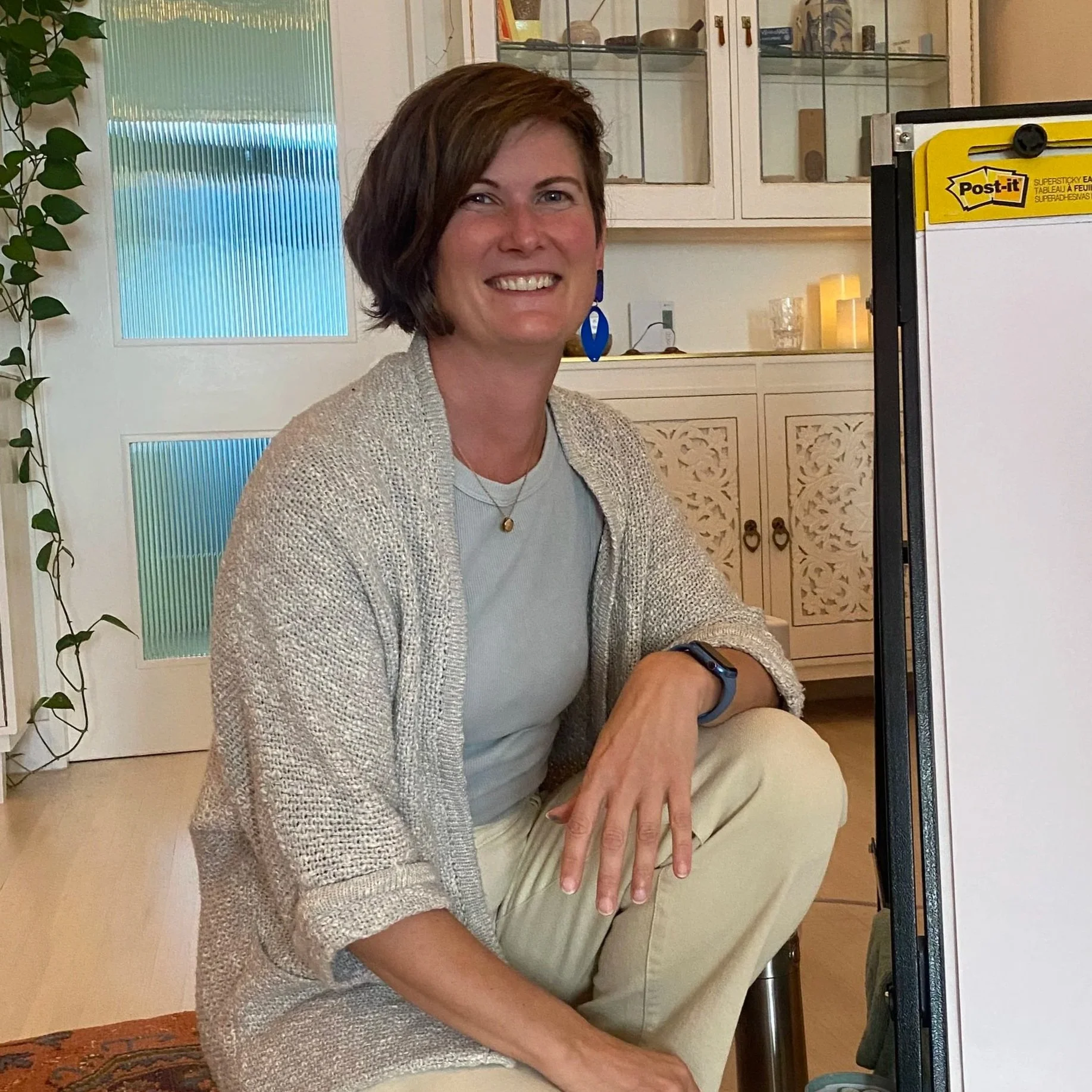
Helena De Felice (she/they) is a Certified Facilitator of the Wheel of Consent® and has been facilitating Wheel of Consent practices since 2016. She is a settler living on the stolen territories of the xʷməθkʷəy̓əm, Sḵwx̱wú7mesh, and səlilwətaɬ peoples for most of the year, and her ancestral home lands in Sweden for some of the year.
Helena is dedicated to developing individual and collective awareness and liberatory practices that deepens our capacity to facilitate healing.
Her facilitation is deeply trauma-responsive and non-judgemental, informed by many years in the field of prevention and response to gender-based violence, senior leadership roles in sexual and reproductive rights, and attending births and deaths.
She has offered Wheel of Consent® training to hundreds of participants, in a wide range of settings, and trains facilitators and practitioners in trauma-responsive facilitation skills.
She has worked with and in anti-oppressive organizations for the past decade in Kiribati, Canada, and US primarily focusing on anti-violence, sexual and reproductive rights, and mental health.
Some identities and presentations where Helena holds unearned rank in many settings: white, European, upper-middle working class upbringing, educated, mostly able-bodied, looks and size close to mainstream western beauty standards, Swedish and English language fluency, travelled, regular access to her ancestral lands, married and straight-passing, and supported by loving partner, colleagues, family, friends, and community. With the following experiences Helena has navigated marginalization: femme, trauma from many dimensions including CSA, SA, and coercive control, burnout, invisibly disabled, queer, immigrant, neurodivergent, English as a second language, artist, and activist.
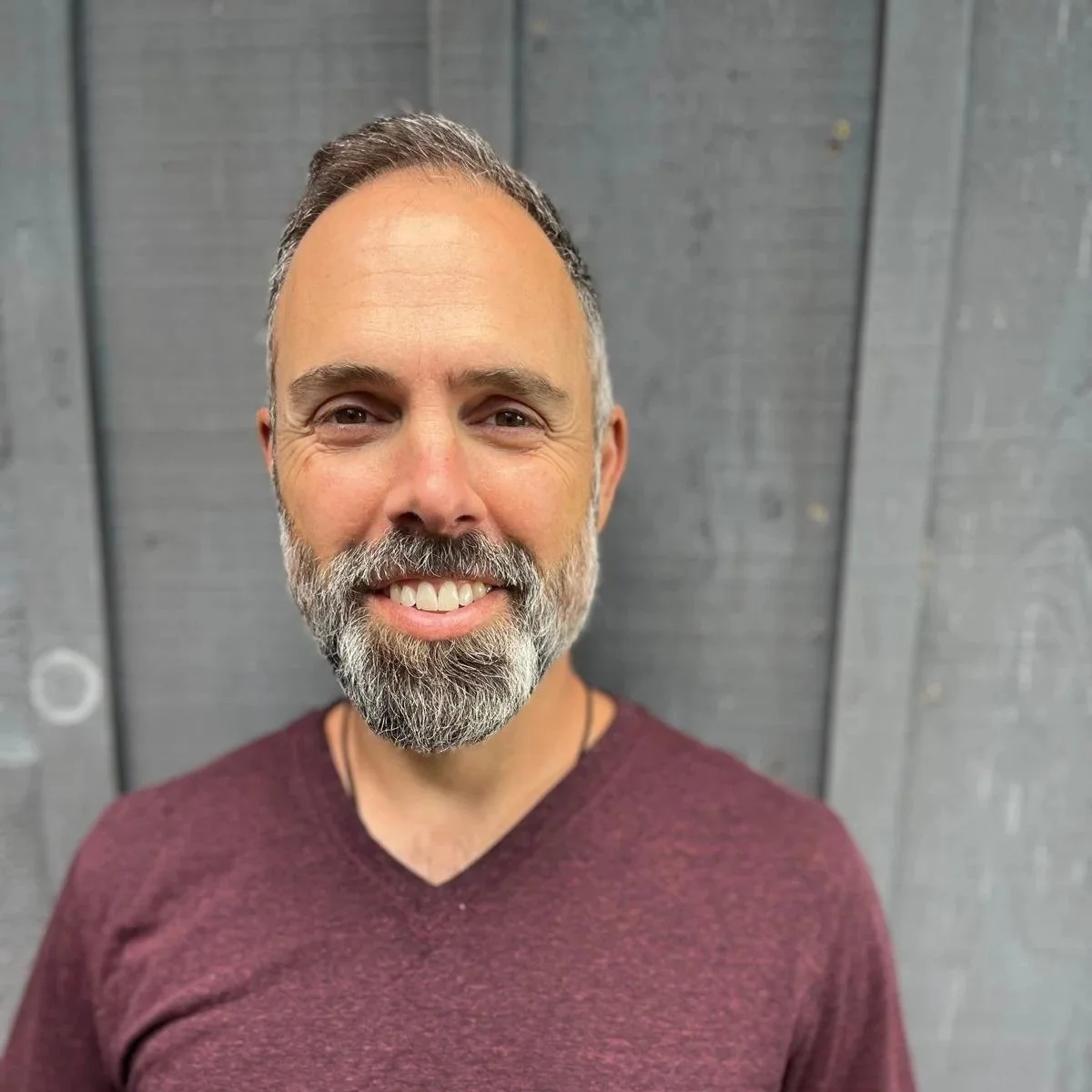
Jay Wade (he/him) is a counsellor, facilitator, certified sexual health educator, and somatic coach who lives on the stolen territory of Cowichan Tribes / Quw'utsun Nation. Through relational and embodied approaches to healing, he is honoured to support those exploring their connection to themselves, others, and the natural world.
For over a decade, he has facilitated retreats and workshops that incorporate elements of the Wheel of Consent and other experiential learning practices, with the intention of inviting participants to cultivate healthier expressions of themselves that contribute to the well-being of their relationships and communities.
Grounded in reverence for ceremony, the wisdom of the body, and our inherent connection to nature, Jay has led programs exploring consent, communication, sexuality, grief, masculinity, and nature awareness, and brings twenty years of experience working with youth and adults. He holds a Master's in Counselling Psychology, is a settler of Italian, Irish, and English ancestry, and grew up in the Great Lakes region on Treaty 19 lands.
WHAT PAST PARTICIPANTS SAY
“"I am feeling deep respect and admiration for every single person that showed up. The willingness and courage to voice insecurities, vulnerabilities, and so much risk taking in allowing yourselves to be seen. The desire others have to learn about this practice and witnessing that learning unfold in realtime. Modelling taking care of oneself and each other, and asking for what you needed. Witnessing the extension of grace, care, patience and respect to one another and a willingness to make mistakes. The tapestry of my heart has been changed from feeling the efforts around inclusion, and for caring about folks that otherwise, oftentimes, get left behind. And so much gratitude to Helena and the assistants for making this happen! Something that you’re taking with you? I’m not able to articulate yet what I’m taking with me. I feel like I “should” be using words like desires, limits, domain, willing, allow etc. But the sentiments travelling through my body are more along the lines of “connected…. belonging…. healing….”
"The workshop, the facilitator/Helena and the physical/energetic space created a safe enough space to explore what was happening within myself and then also in relation with others. The dyad practices were powerful in slowing down and noticing what was happening in my body, and furthermore communicate to another (if needed) my needs/wants. I learnt to understand and respect my limits (and also those of others).
The whole 3 days was a practice in strengthening the wiring within my brain and body to really value and TRUST the signals emerging from within. Getting to practice that "choosing is more important than doing" allowed me to remember the choice and agency I have. I can now better FEEL in my body what feels like my yes, no, maybe etc.
I feel I have more agency now. I am honouring my rhythm more now. I understand now why I have repeatedly burnout in the work I do with others. It truly is sacred work that not only impacted me, but also has been rippling out into all my relationships. It is allowing me to access more joy, pleasure and open-hearted living with myself, others and mother earth. Words can't fully describe the power and wisdom that I accessed through this workshop :)"