
Wheel of Consent® Workshops with Helena De Felice
Embodied
Consent Practice
A foundational practice for relating
Jump to these sections
Upcoming Embodied Consent Workshops
Friday, Saturday, Sunday
10AM - 6PM
Sliding scale:
$395-$855 + HST (CAD)
Max 16
Toronto, ON

Tuesdays Oct 27 to Dec 1
9-11am Pacific
Sliding scale:
$150 to $630 + GST (CAD)
Max 23
Online
Friday, Saturday, Sunday
10AM - 6PM
Sliding scale:
$395-$875 + HST (CAD)
Max 14
Ottawa, ON

Friday, Saturday, Sunday
10AM - 6PM
Sliding scale:
$395-$875 + HST (CAD)
Max 16
Toronto, ON

Friday, Saturday, Sunday
10AM - 6PM
Sliding scale:
$395-$875 + GST (CAD)
Max 16
Vancouver, BC
Looking for a customized offer? Don’t see your community listed?
We work collaboratively with communities, teams, and organizations to engage in this practice.
We co-create offerings that are “safe enough” for your learning and tailored to your specific needs.

Through experimentation in practices we deepen our skills in sensing and tending our own wants, needs, and boundaries and our ability to support others in honouring their inherent dignity.
Embodied Consent (informed by Wheel of Consent®) is practice of embodied awareness, attunement, and communication.
These skills are relational.
We need each other to develop them.
The root of the word consent is con- sentire. To feel with.
Feeling together is a practice of personal and relational integrity.
Within this practice, we meet what arises with presence, curiosity, and care.
We slow down and tend to our personal and mutual sense of safety and connection.
We include awareness of how power dynamics impact our relationship.
Engaging in this practice deepens our awareness and capacity to care for ourselves and tend what is occurring in our relational dynamics. This enables us to navigate our relationship with ourselves and others with more care, dignity, and integrity.
We access new levels of clarity and ease, gratitude, joy, generosity, and confidence.
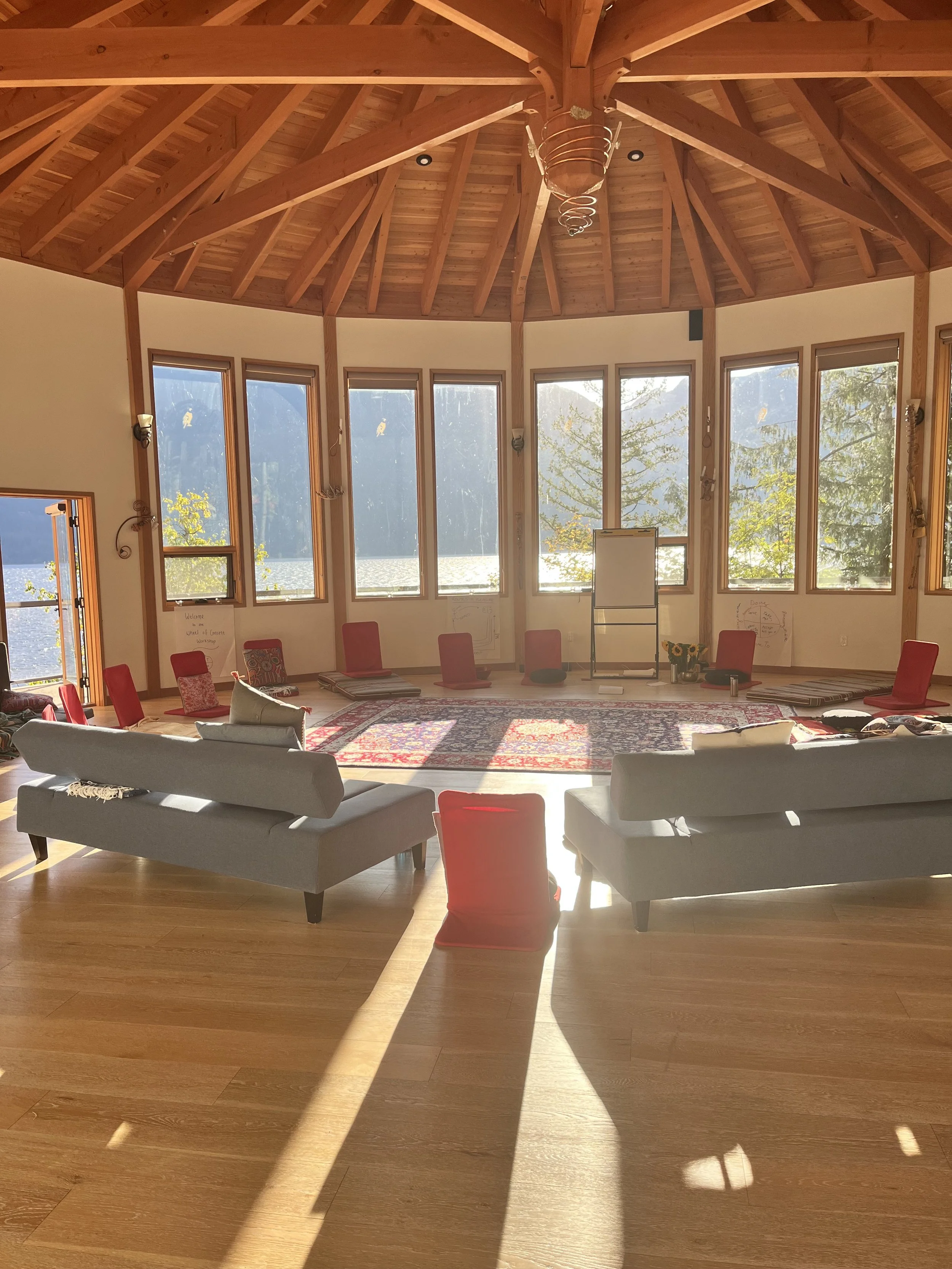
A Small Sample of Spaces that Have Held This Practice
-
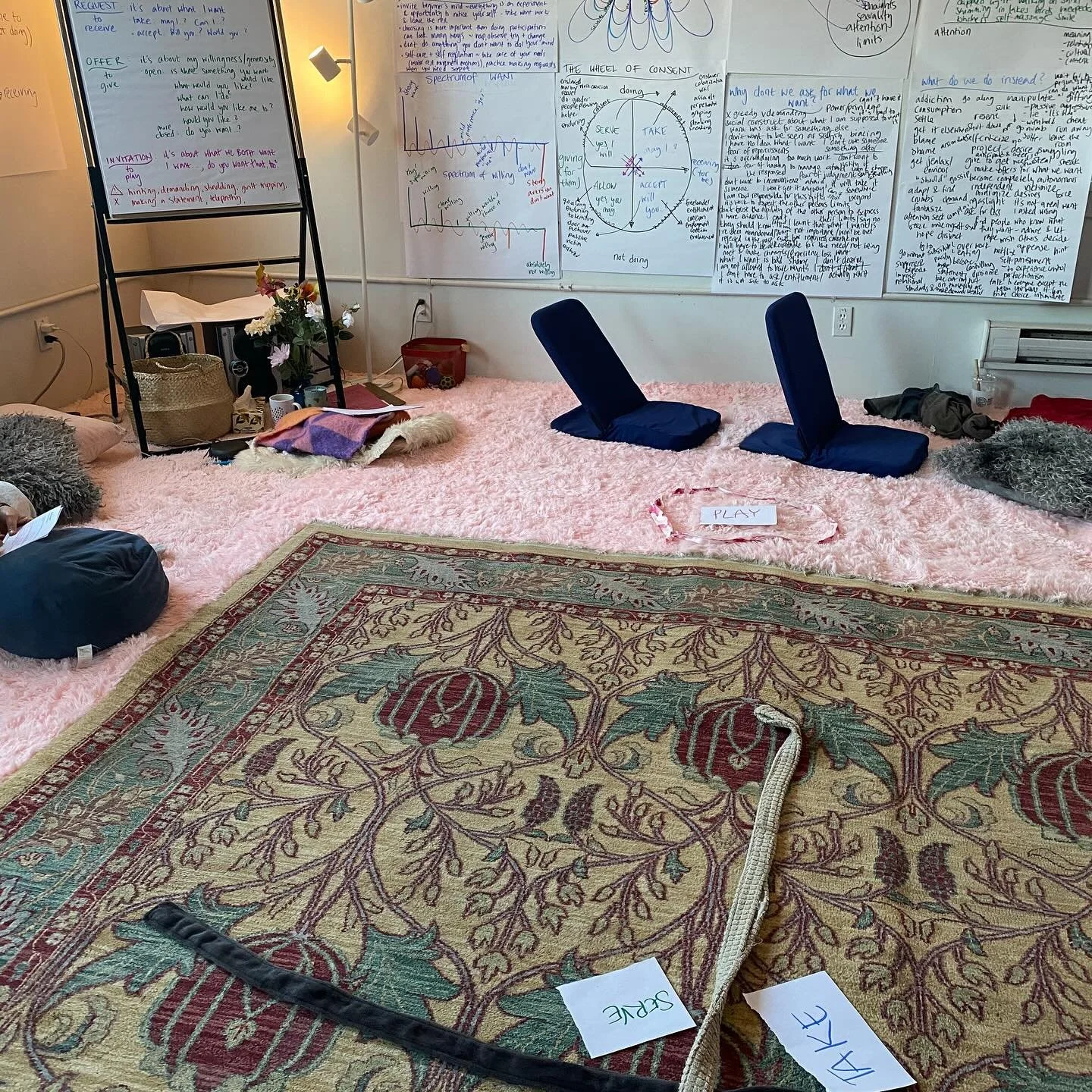
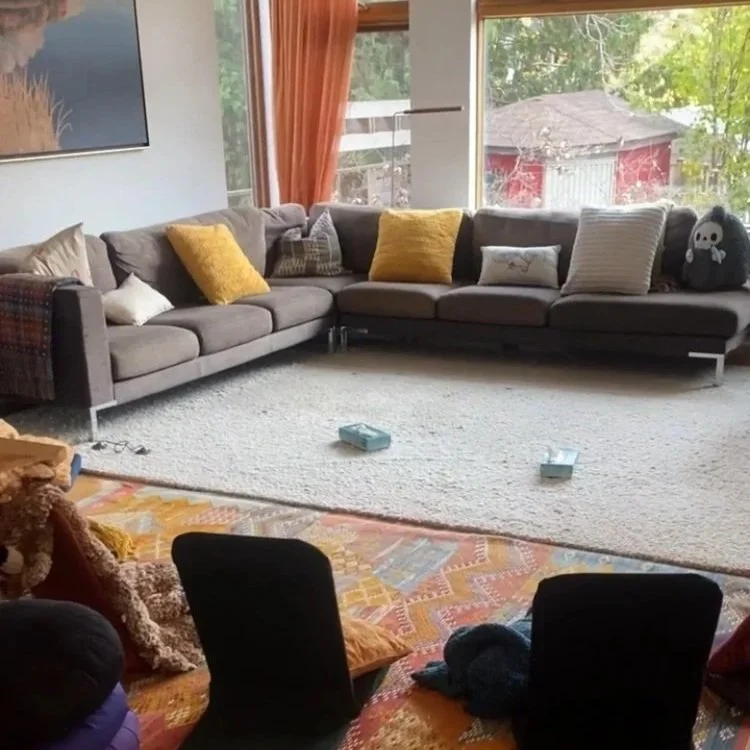
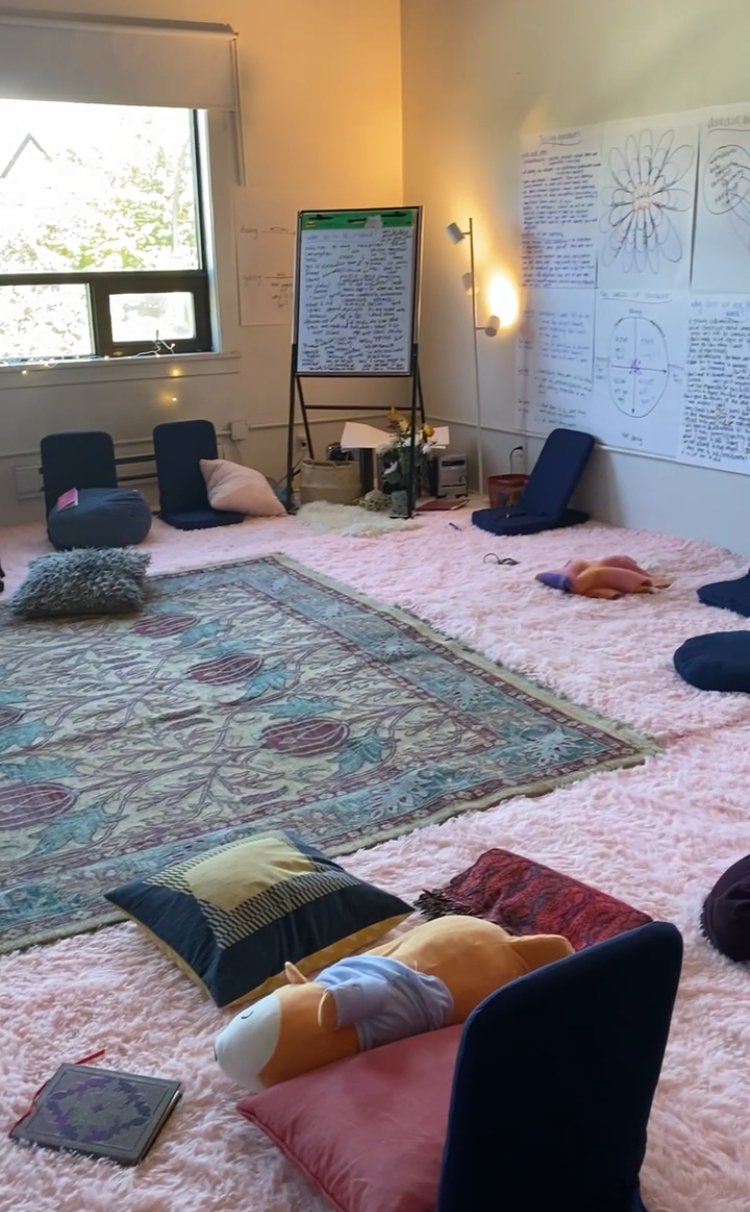
![Wheel of Consent Workshop Sudbury Ontario]()
Sudbury, Ontario, Canada
-
![Wheel of Consent Workshop, The Sentinel, Kalso, BC, Canada]()
The Sentinel, Kalso, BC, Canada
-
![Wheel of Consent Workshop, What Lab, Vancouver, BC, Canada]()
What Lab, Vancouver, BC, Canada
-
![Wheel of Consent Workshop, Ottawa, ON, Canada]()
Ottawa, Ontario, Canada
-
![Wheel of Consent Workshop, What Lab, Vancouver, BC, Canada]()
What Lab, Vancouver, BC, Canada
-
![Wheel of Consent Workshop, Love & Peace Studio, Vancouver, BC, Canada]()
Love & Peace Studio, Vancouver, BC, Canada
-
![Wheel of Consent Workshop, Sudbury, Ontario, Candad]()
Sudbury, Ontario, Canada
-
![5 Rhythms, Vancouver, BC, Consent Training, Canada]()
5 Rhythms Team Training, Vancouver, BC, Canada
-
![Wheel of Consent Workshop, AO Studio Space, Vancouver, BC, Canada]()
AO Studio Space, Vancouver, BC, Canada
-
![Like A Pro Facilitator Training]()
Facilitator Training, California, US
-
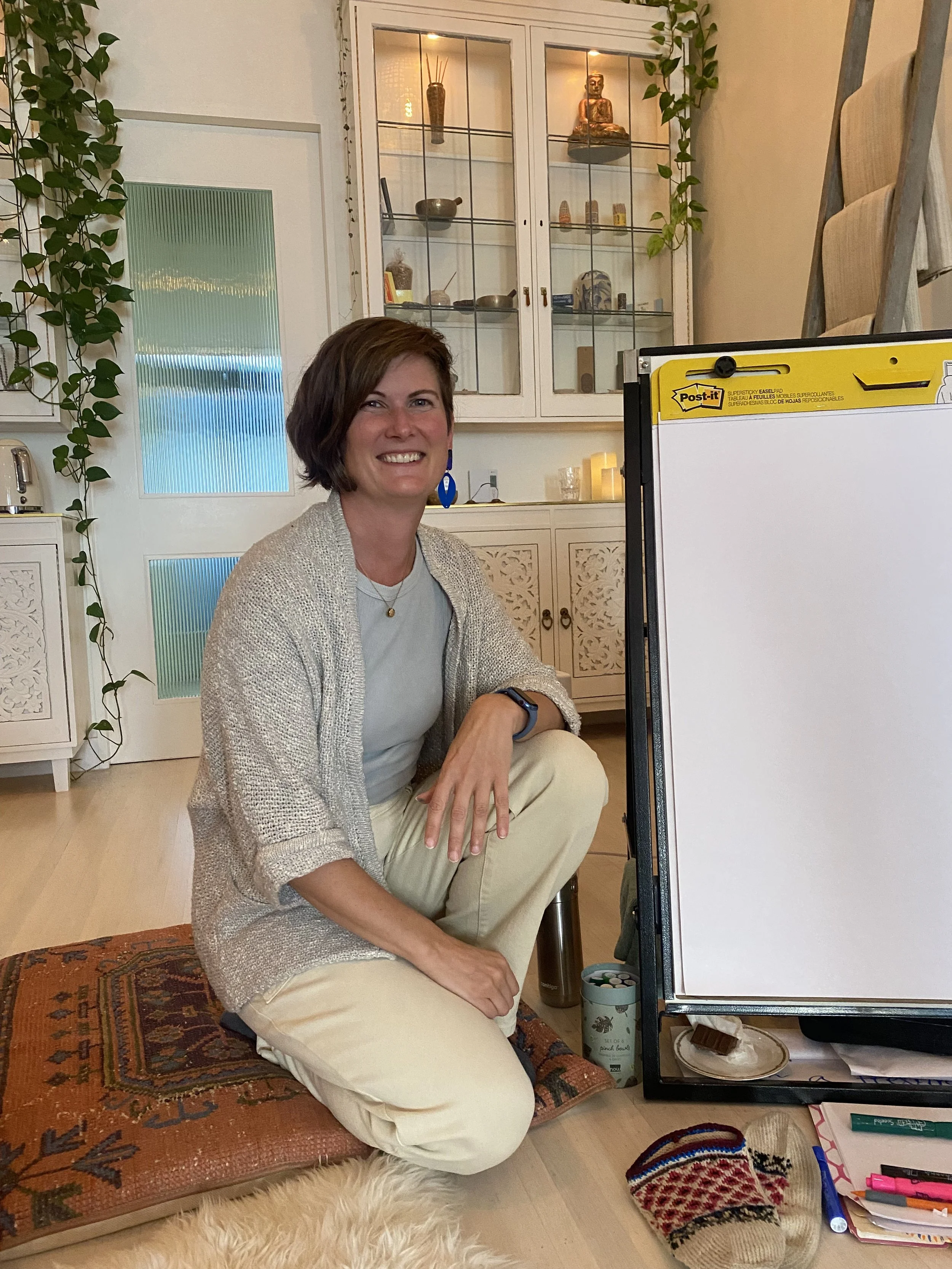
![Helena De Felice leading a Wheel of Consent Workshop at Love & Peace Studio, in Vancouver, BC, Canada]()
Love & Peace Studio, Vancouver, BC, Canada
-
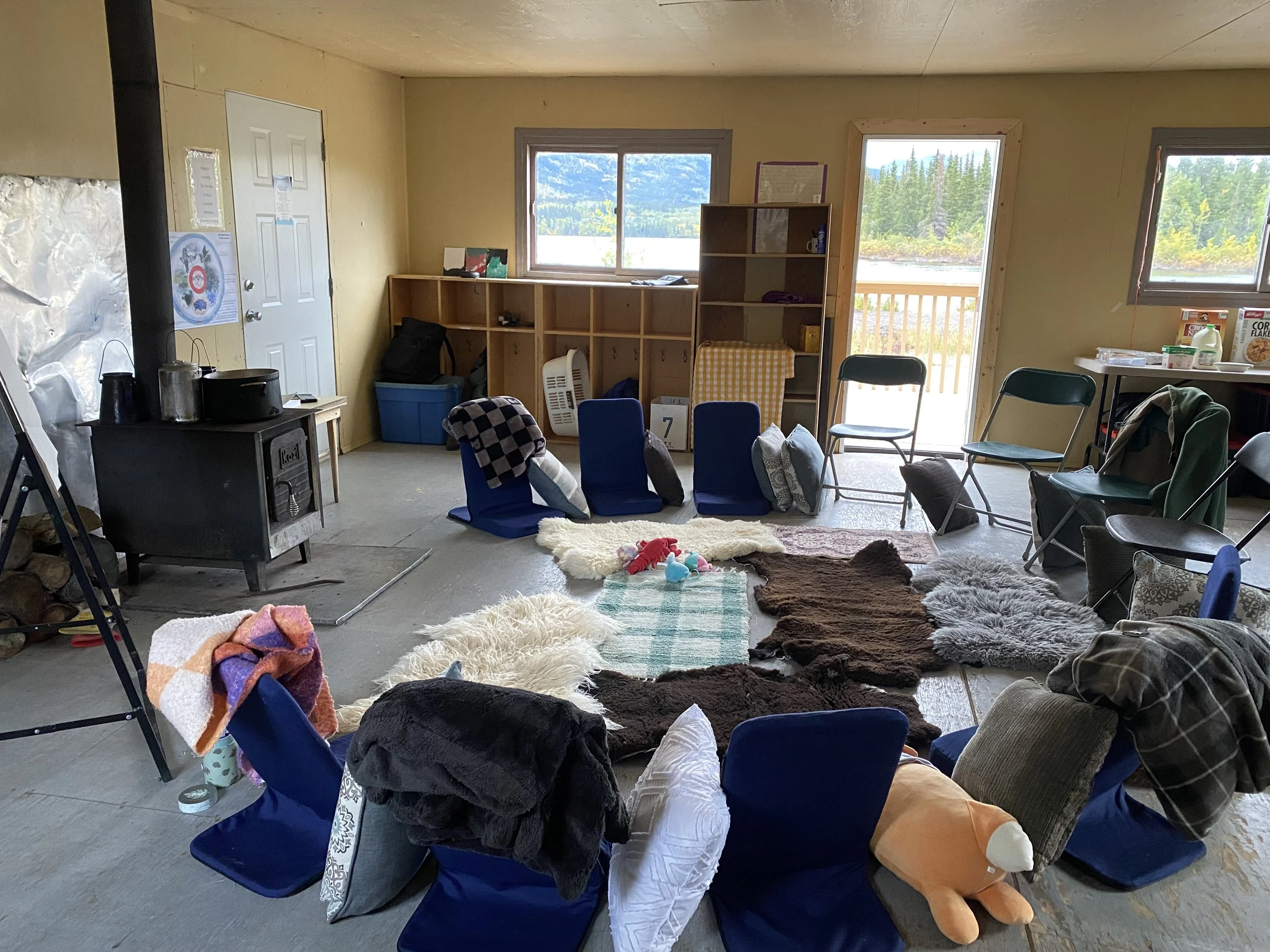
![5-Mile Point, Taku River Tlingit Territory]()
5-Mile Point, Taku River Tlingit Territory
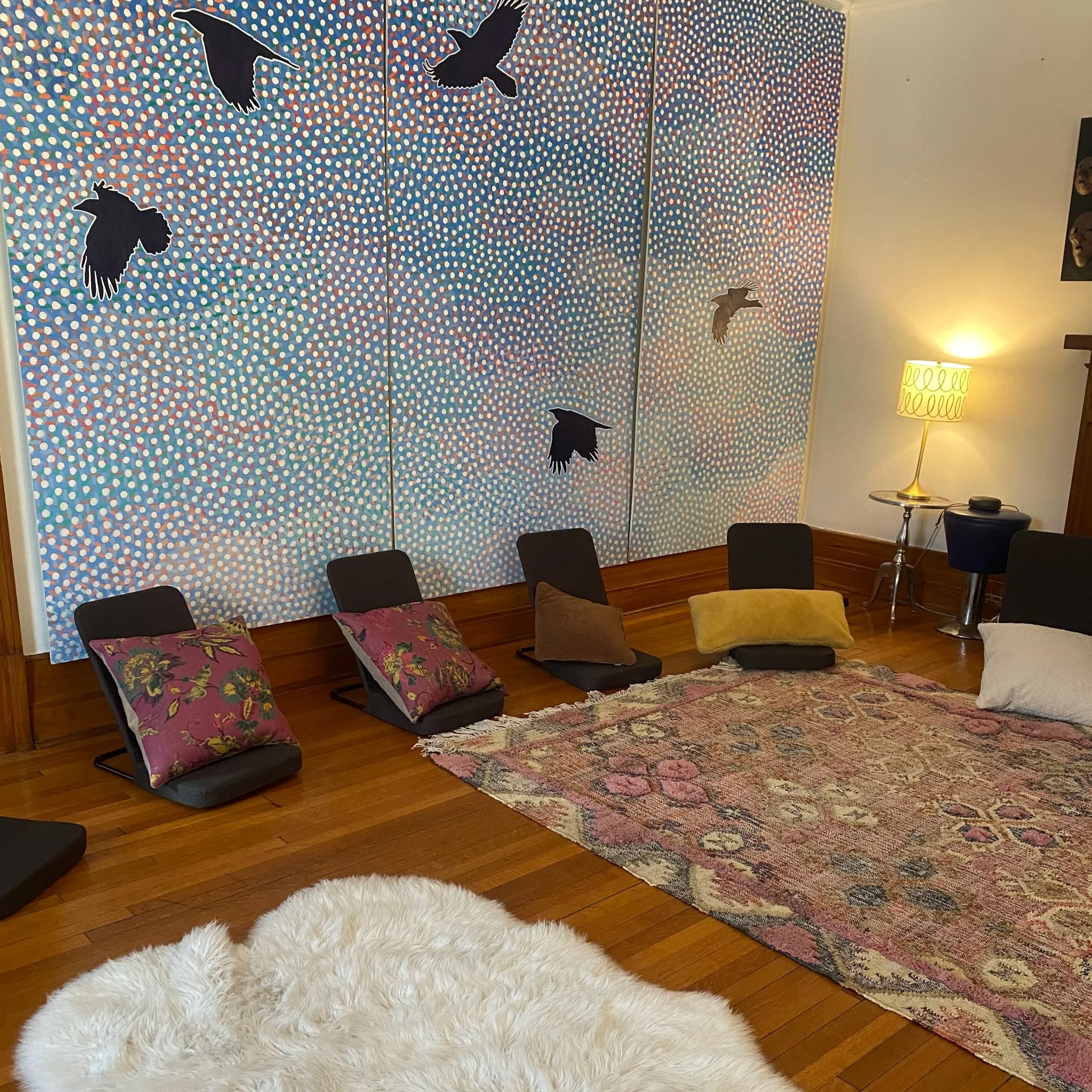
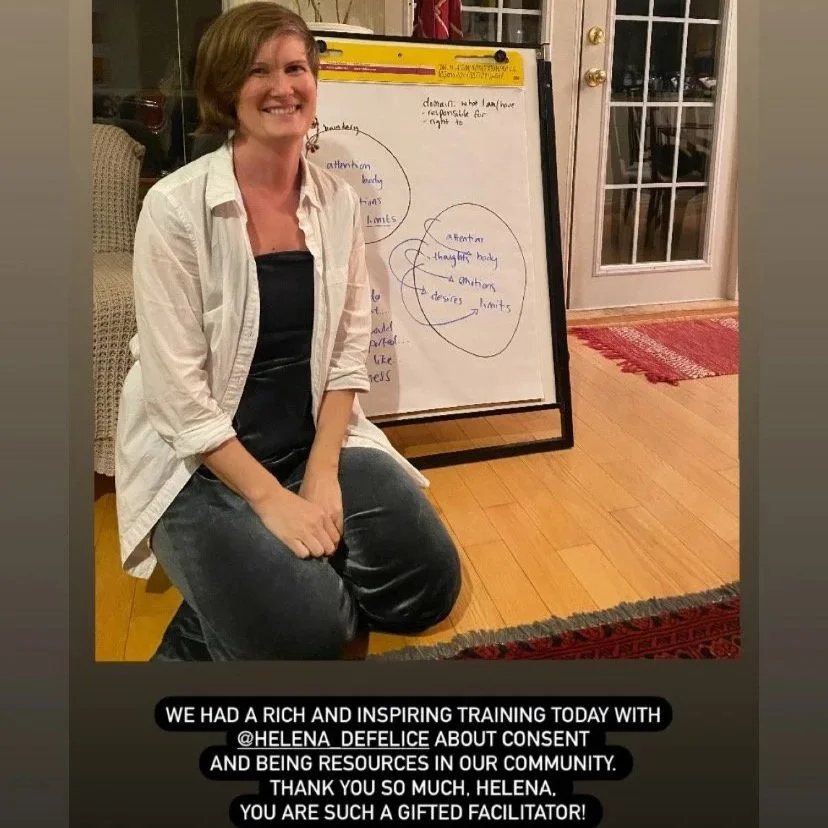
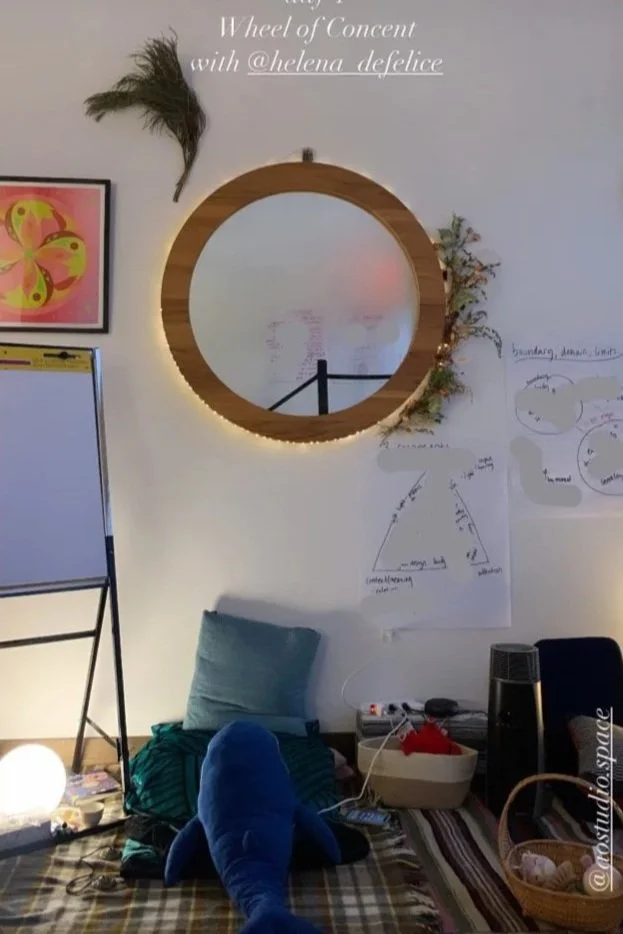
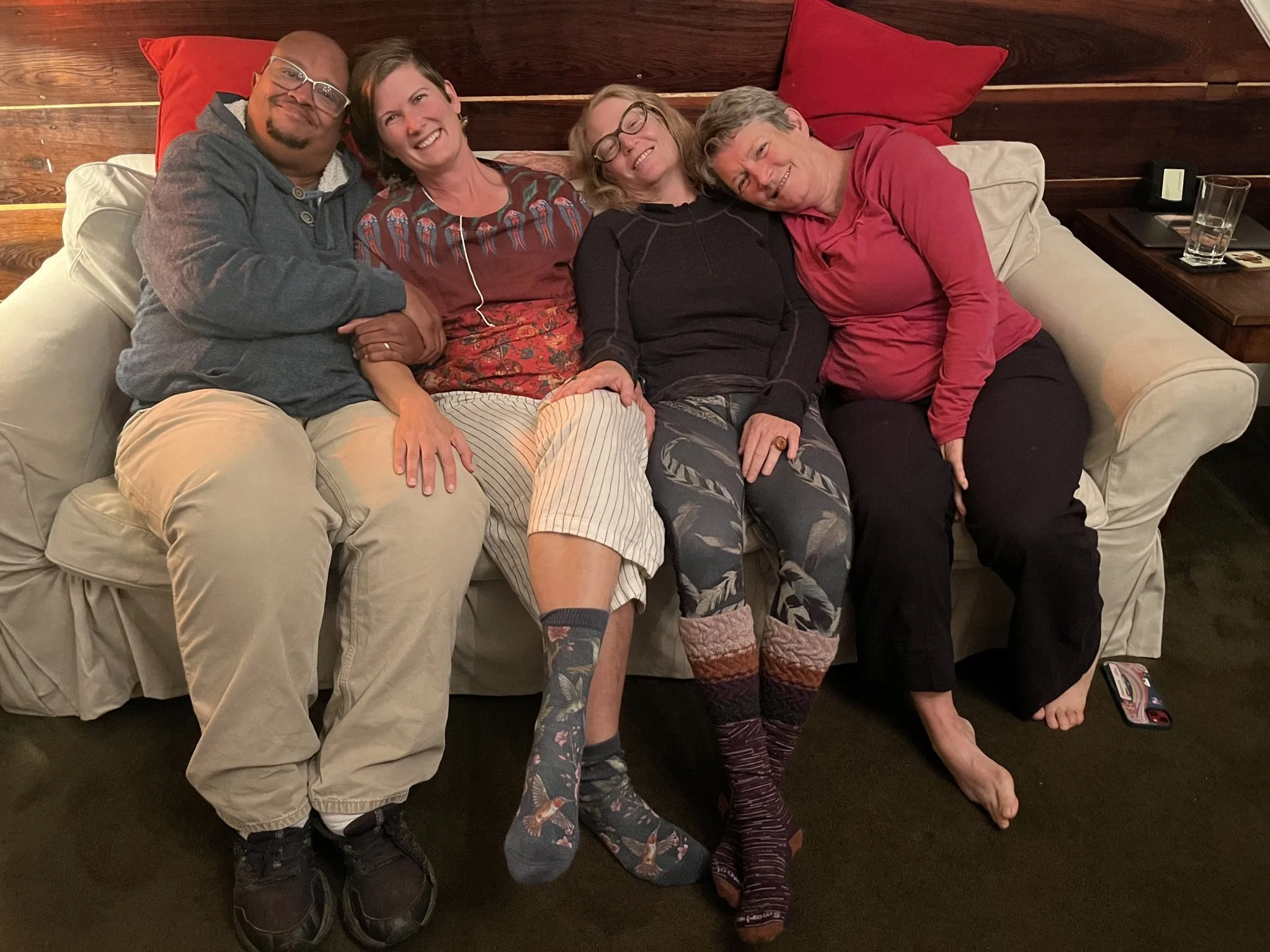

Who is it for?
“Who is it for” is a central question in the practice of the Wheel of Consent®.
The practice of embodied consent is profoundly impactful for bringing deeper intimacy, integrity, and care into your relationship with yourself and others.
Those who are drawn to this practice tend to:
໑ work with people in a position of power, and have a commitment to positively affect human change and healing (teacher, therapist, bodyworker, physician, manager, leader, etc.)
໑ be looking for deeper and more meaningful connection in their relationships (intimate, family, friendship, community, etc.)
໑ have experienced harm and have a desire to access a deeper sense of safety and trust in their own body and confidence in moving towards deeper intimacy
໑ be interested in developing deeper self-awareness and relational skills for more ease and joy in life, and/or
໑ care deeply about dignity, respect, and want to be more skillful in caring for themselves and others.
With more power comes greater responsibility.
We consider advanced embodied consent skills ,with awareness of how power and safety influences choice, to be essential for:
໑ practitioners, teachers, facilitators and care providers,
໑ leaders working within positions of authority, and
໑ leaders committed to empowering others in affirming their personal autonomy and power.
Who is this not for?
This practice is tender and potent.
It is important that you participate because you want to.
It is not appropriate for anyone else to require or demand that you attend.
You are welcome to arrive and leave with skepticism and doubt.
You are welcome to leave whenever you want, and return when you want to (or not at all).
You are not required to trust or believe what the facilitator offers or trust others in the space.
Doubt, skepticism, and distrust are all important and wise signals designed to keep you safe.
A cue that it may be best to wait until you are more resourced is that
the idea of engaging in this practice causes your body to contract, experience tension, or anxiety.
If you are in active crisis, it is best to seek other supports. Consider engaging in this practice once you are out of crisis and you can access more curiosity, perhaps with ongoing support from a therapist.
Sometimes more information about the workshop, what you can expect, and how you can care for yourself can resolve some tension or hesitation. Sometimes it helps clarify a ‘no’ or ‘not now’.
Sometimes a brief meeting with the facilitator can help.
You can schedule a free 20-minute consult here.
Sometimes it is supportive to attend with a partner and a friend, sometimes it can make it more difficult to drop into the practice and your own experience for your own learning.
It may not be appropriate to attend with someone you are in a role-power differential relationship with (e.g. your boss, or therapist).
Where can I start, without committing to an in person workshop?
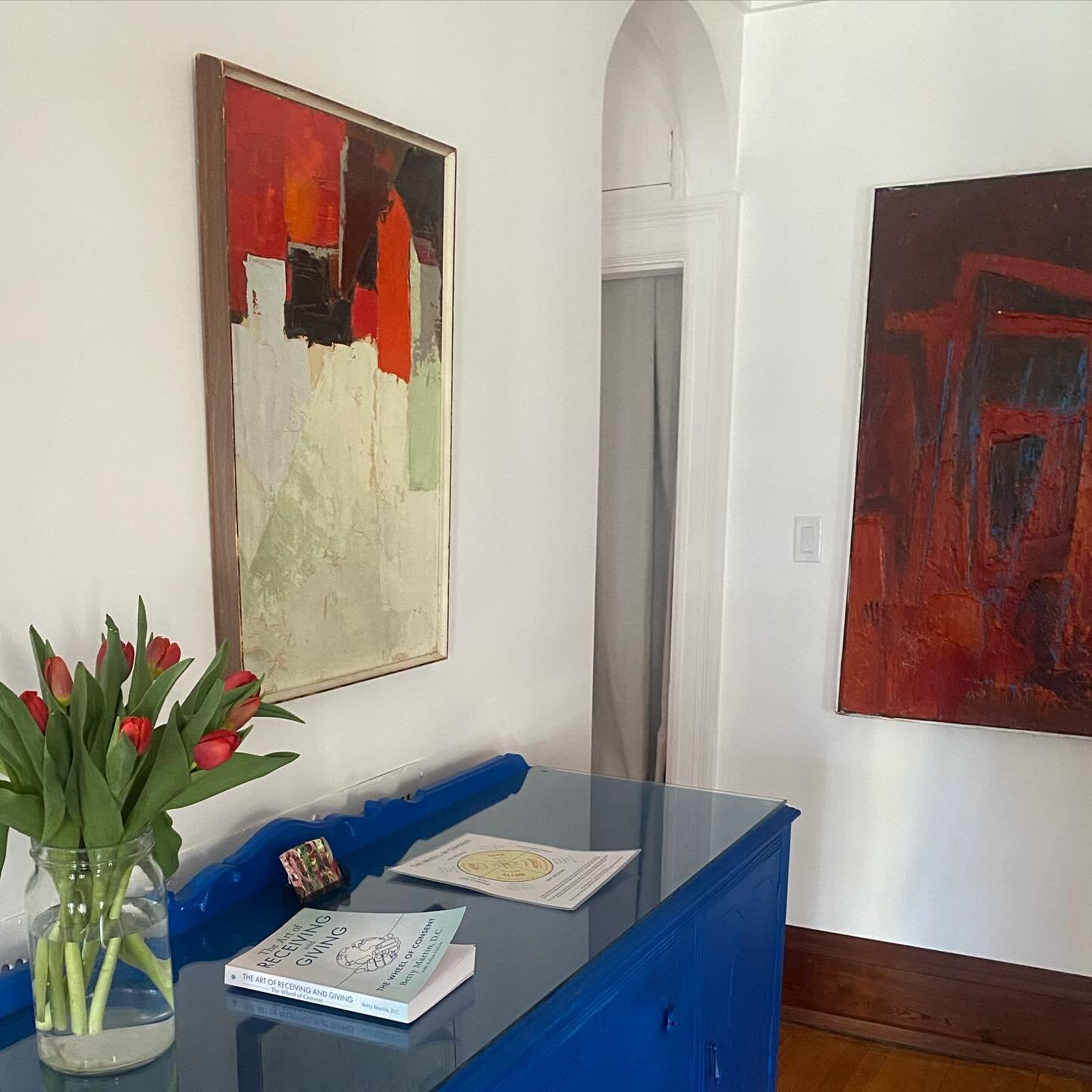
- read the book The Art of Receiving and Giving by Betty Martin
- explore some of the practices that Betty describes on your own
- watch some of Betty’s videos
- try a one-on-one coaching session, or
- attend an online introduction or online training.
What People Are Saying
-
![]()
“This is an incredibly subtle and profound practice. We're deepening truly foundational skills. I experience so much resonance and complement to the work that I do. It has been immediately applicable in my practice” ~ Somatic Experiencing Therapist
-
![]()
“It's truly transformational work and so necessary for the healing and growth we are in desperate need of." ~ Acupucturist
-
![]()
“This practice has completely changed how I related to others. I'm more loving, kind, respectful of myself and others. Being more trusting of myself. Less co-dependent. Less potential for burnout. List goes on and on.” ~ Occupational Therapist & Somatic Experiencing Practitioner
-
![]()
”This course is so relevant to me personally, as I navigate how to be a good friend and partner, as well as professionally in my work as a counsellor and facilitator. By becoming clearer about when I am asking people in my life to give to or receive from me, and listening to my own and others' limits, I am able to create relationships with more safety and integrity for everyone.” ~ Trina, Therapist
-
![]()
"I know myself WAY more. I am trusting my impulses, my no's and yes's and I am able to voice them more clearly now. I am grateful for this modality. It is a gentle, deep, and foundational piece for creating healthy, safe, and intimate relationships with oneself and others." ~ Teacher
-
![]()
“Wow. This is the safest container I have ever been in. I’ve never experienced this freedom and spaciousness. There's SO much value here, and I have experienced insights I will digest for a long time, and yet I never felt overwhelmed. Very powerful” ~ Somatic Therapist
-
![]()
"Amazing. Do this course. It will change your life, as you practice the skills that grow your confidence to live in greater residency in your body, and to take up the space in the world that you want and need." ~ Kristina, Non-profit consultant
-
![]()
This was the most well-facilitated workshop I've experienced. I learnt as much about facilitation and creating safety as I did from the practices themselves. ~ Therapist





-
!["The workshop, the facilitator/Helena and the physical/energetic space created a safe enough space to explore what was happening within myself and then also in relation with others. The dyad practices were powerful in slowing down and noticing what]()
"The workshop, the facilitator/Helena and the physical/energetic space created a safe enough space to explore what was happening within myself and then also in relation with others. The dyad practices were powerful in slowing down and noticing what was happening in my body, and furthermore communicate to another (if needed) my needs/wants. I learnt to understand and respect my limits (and also those of others). The whole 3 days was a practice in strengthening the wiring within my brain and body to really value and TRUST the signals emerging from within. Getting to practice that "choosing is more important than doing" allowed me to remember the choice and agency I have. I can now better FEEL in my body what feels like my yes, no, maybe etc. I feel I have more agency now. I am honouring my rhythm more now. I understand now why I have repeatedly burnout in the work I do with others. It truly is sacred work that not only impacted me, but also has been rippling out into all my relationships. It is allowing me to access more joy, pleasure and open-hearted living with myself, others and mother earth. Words can't fully describe the power and wisdom that I accessed through this workshop :)" ~ Occupational Therapist & Somatic Experiencing Practitioner
-
!["I am feeling deep respect and admiration for every single person that showed up. The willingness and courage to voice insecurities, vulnerabilities, and so much risk taking in allowing yourselves to be seen. The desire others have to learn about thi]()
"I am feeling deep respect and admiration for every single person that showed up. The willingness and courage to voice insecurities, vulnerabilities, and so much risk taking in allowing yourselves to be seen. The desire others have to learn about this practice and witnessing that learning unfold in realtime. Modelling taking care of oneself and each other, and asking for what you needed. Witnessing the extension of grace, care, patience and respect to one another and a willingness to make mistakes. The tapestry of my heart has been changed from feeling the efforts around inclusion, and for caring about folks that otherwise, oftentimes, get left behind. And so much gratitude to Helena and the assistants for making this happen! Something that you’re taking with you? I’m not able to articulate yet what I’m taking with me. I feel like I “should” be using words like desires, limits, domain, willing, allow etc. But the sentiments travelling through my body are more along the lines of “connected…. belonging…. healing….”

“Going along with” is so familiar to us that we hardly notice it is happening.
Slowing down, tending to safety, and attuning to ourselves
changes everything.
Download the Wheel of Consent® PDF
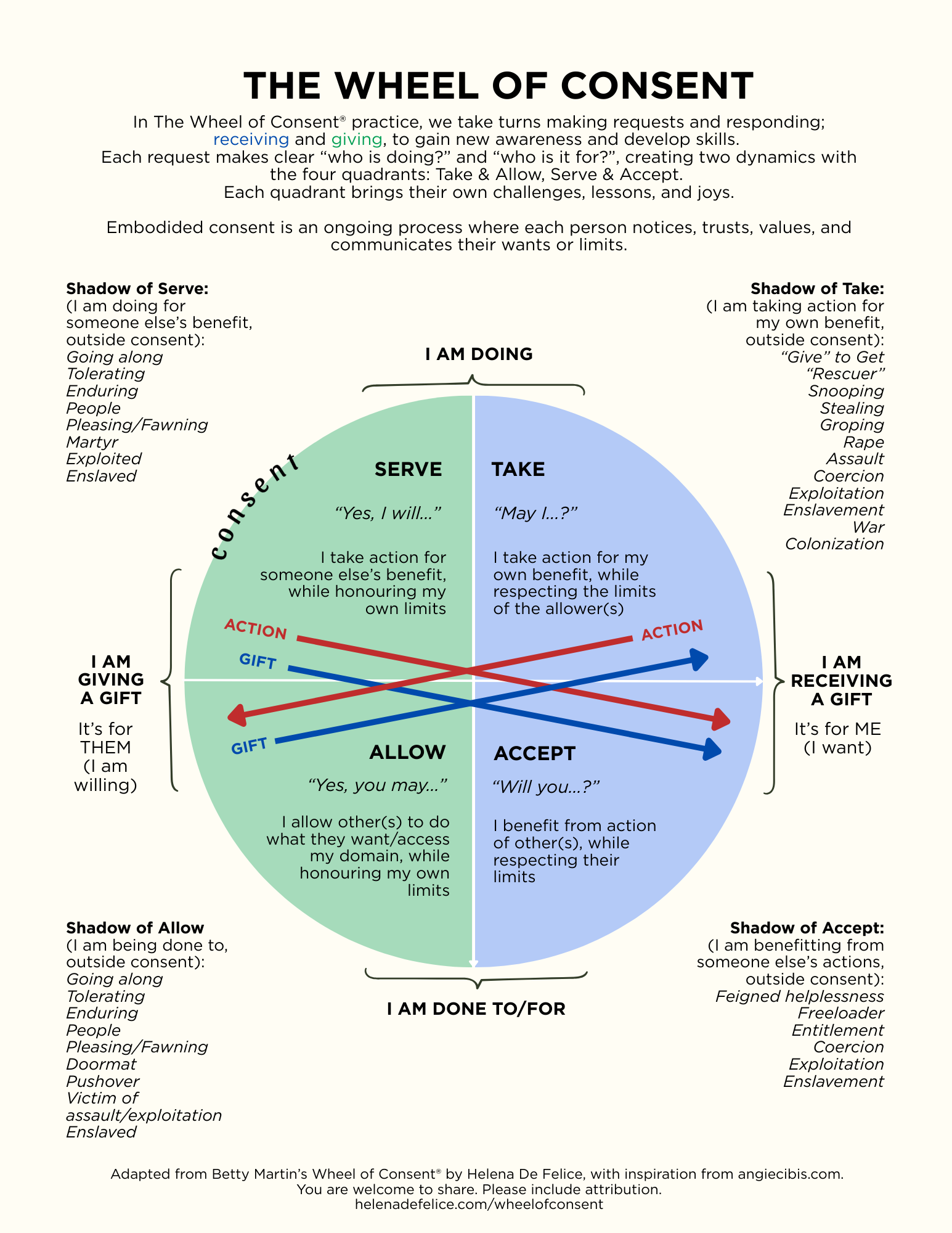
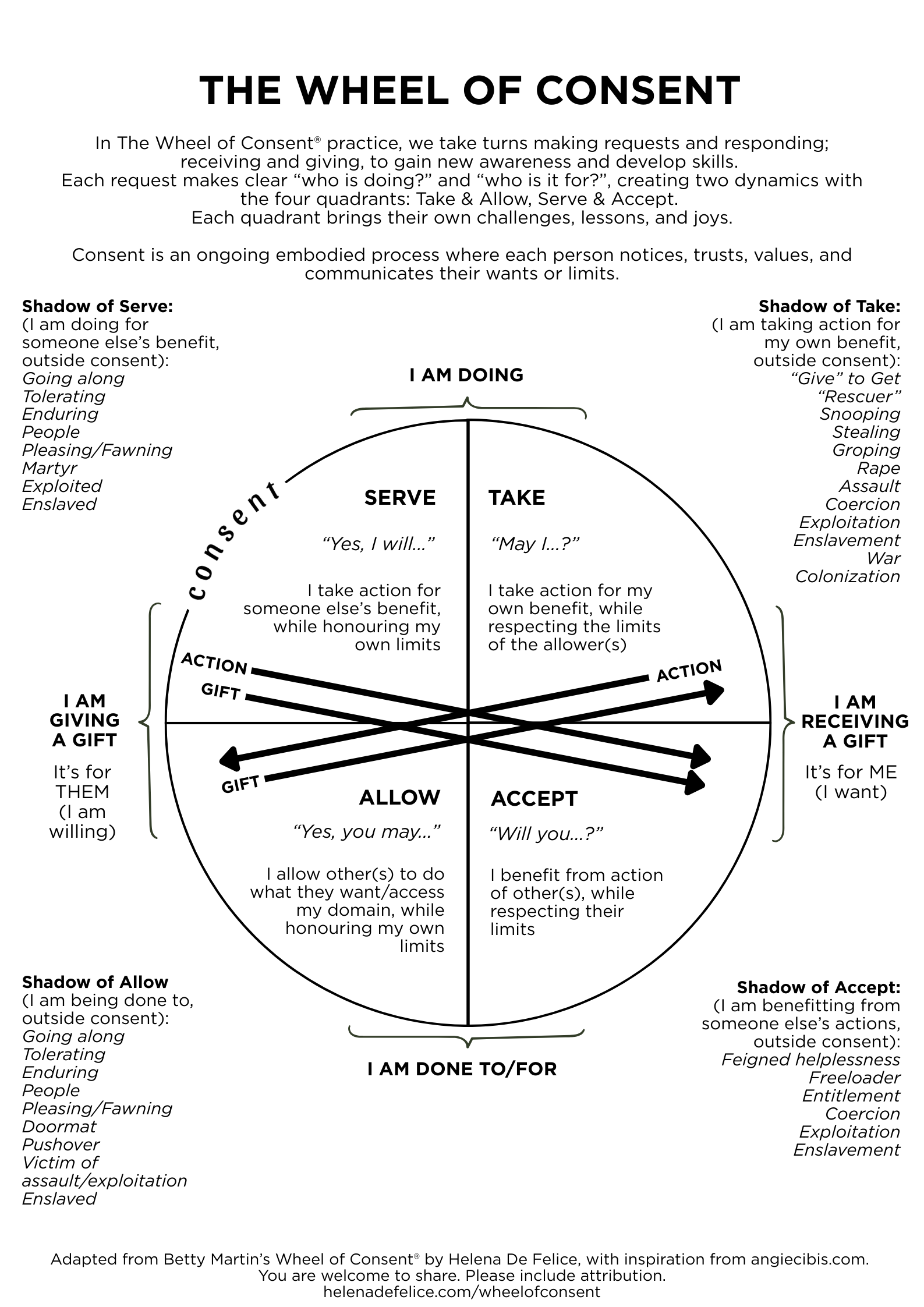
What’s different in this handout (compared to the original)?
1. The text has been re-oriented and brackets have been added for accessibility. Thank you Angie Cibis!
2. The description of the practice, description of the quadrants, and the shadows have been updated to make it more complete and congruent with how Helena currently teach this practice.
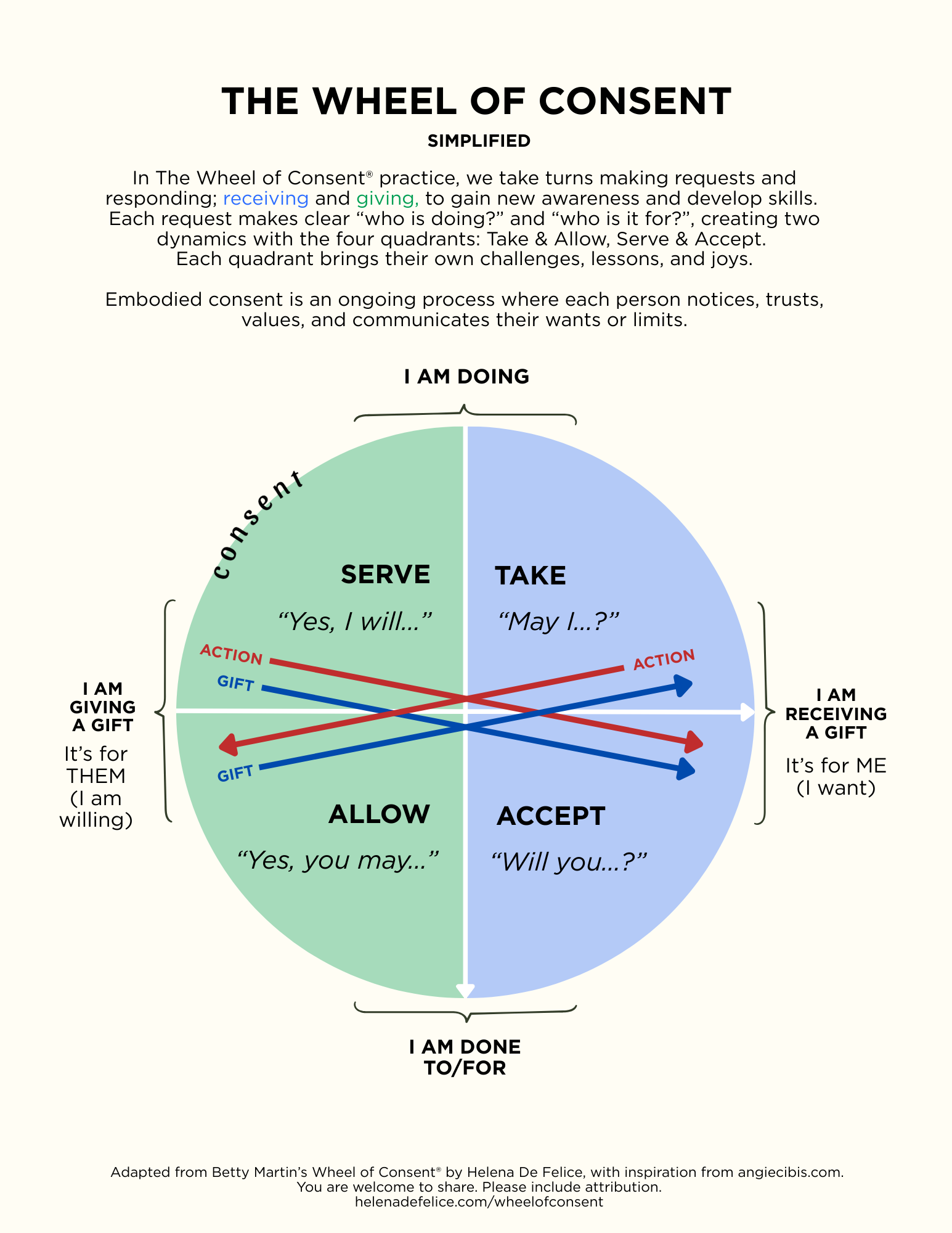
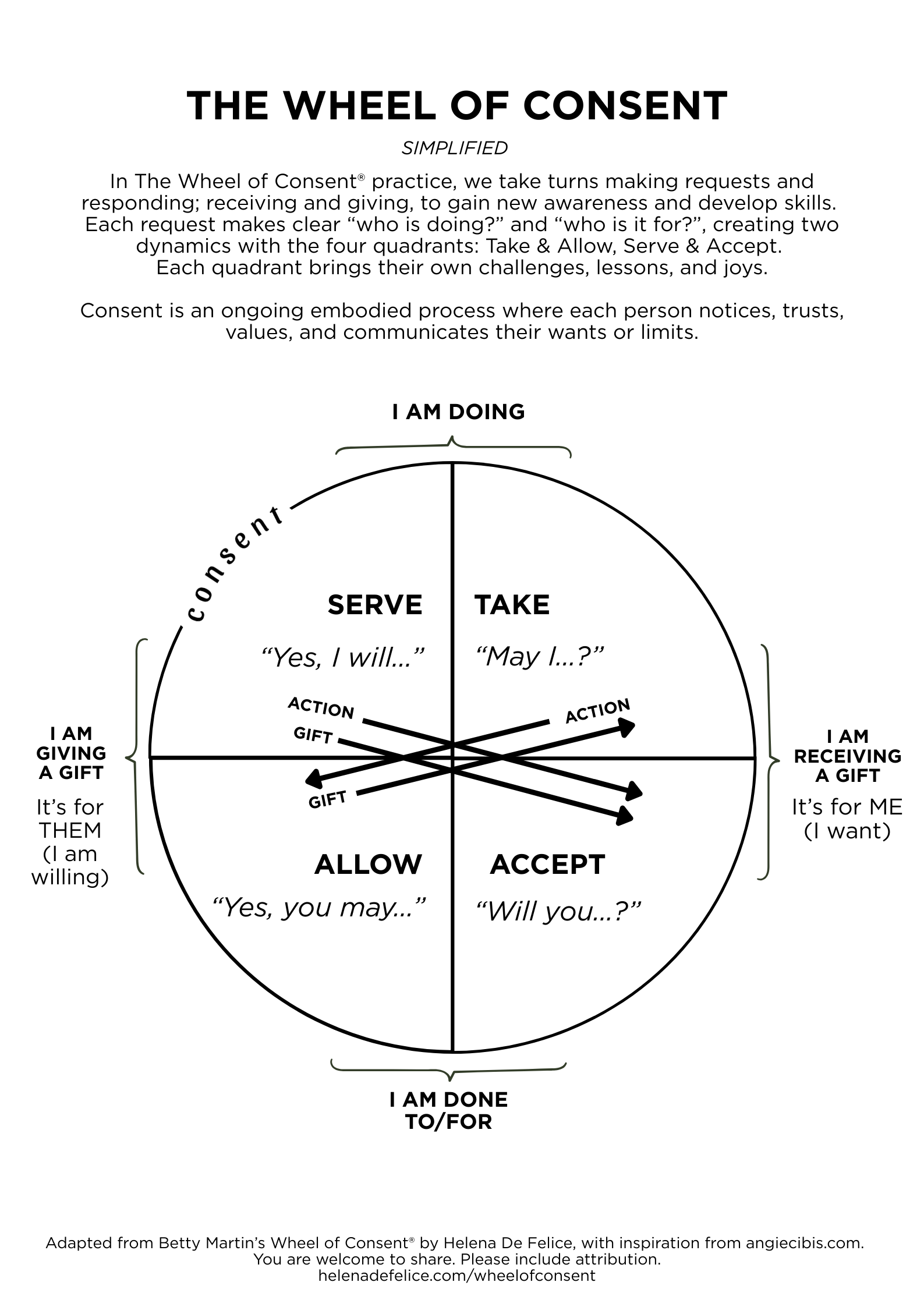
What’s different in this simple handout?
1. Removed descriptor of the quadrants and the shadows of each quadrant.